.png)
In today's hyper-connected business landscape, managing customer communications effectively has become a critical factor in driving growth, retention, and overall customer satisfaction. The approach outlined by Sturdy represents a significant leap forward in how organizations can consolidate, analyze, and act upon customer interactions across multiple channels. This evolution in customer communication management aligns with broader industry trends and addresses several key challenges faced by modern businesses.
- The Challenge of Communication Fragmentation
The proliferation of communication channels has led to what industry experts call "communication fragmentation." According to a study by Salesforce, customers use an average of 10 different channels to communicate with companies [1]. This fragmentation creates significant challenges for businesses trying to maintain a coherent view of customer interactions and sentiment.
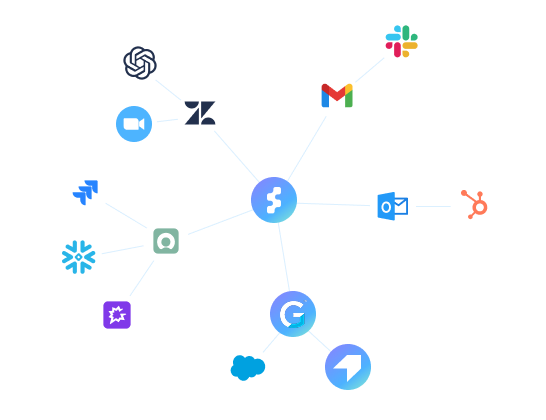
Sturdy's approach of consolidating various communication channels into a single signal stream addresses this issue head-on. By integrating data from email, tickets, chat, calls, CRM records, and collaboration tools, companies can create a unified view of customer interactions. This consolidation is crucial for maintaining context and continuity in customer relationships, especially in complex B2B environments where multiple stakeholders may be involved in communications [2].
- The Power of AI-Driven Insights in Customer Communications
The application of artificial intelligence and natural language processing (NLP) to analyze customer communications represents a significant advancement in deriving actionable insights from unstructured data. A report by Gartner predicts that by 2025, 75% of B2B sales organizations will augment traditional sales playbooks with AI-guided selling solutions [3]. This trend aligns with Sturdy's use of NLP classifiers to tag sentences with intelligence categories such as churn risk, sentiment, and expansion signals.
The ability to automatically identify and categorize actionable signals within customer communications (as Sturdy reports, approximately 17% of customer-to-business communications contain such signals) can significantly enhance a company's ability to proactively address issues and capitalize on opportunities. This level of automated insight generation can lead to more informed decision-making and faster response times to customer needs [4].
- Streamlining Account Reviews and QBRs
The traditional approach to preparing for account reviews and Quarterly Business Reviews (QBRs) often involves time-consuming manual processes of collating information from various sources. A survey by Gainsight found that customer success managers spend an average of 5-10 hours preparing for each QBR [5]. Sturdy's capability to generate evidence-backed account reviews and QBR outputs in seconds represents a significant time-saving opportunity for customer-facing teams.
Moreover, the ability to trace each claim in a review back to its original source enhances the credibility and actionability of these reviews. This traceability aligns with best practices in data-driven decision making, where the provenance of information is crucial for building trust and driving action [6].
- Automating Actions for Improved Customer Outcomes
The integration of detected signals with automated workflows that trigger actions in existing systems (such as Slack alerts, Jira issues, or CRM updates) represents a crucial step in closing the loop between insight and action. This automation aligns with the concept of "closed-loop customer experience management" advocated by customer experience experts [7].
By enabling teams to act quickly on insights within their existing workflows, companies can significantly reduce the time between identifying an issue or opportunity and taking action. This rapid response capability is particularly crucial in competitive markets where customer retention and expansion opportunities can be time-sensitive [8].
- Security and Compliance Considerations
As organizations consolidate and analyze increasing volumes of customer data, security and compliance become paramount concerns. Sturdy's reported enterprise security controls, including SOC 2 Type II attestation and data encryption, address these concerns. This focus on security aligns with broader industry trends, as a survey by KPMG found that 67% of CEOs believe that protecting customer data is one of their most important responsibilities in growing their customer base [9].
- The Role of Predictive Analytics in Customer Relationship Management
Building upon the concept of AI-driven insights, predictive analytics is becoming increasingly important in customer relationship management. By analyzing historical data and current communication patterns, predictive models can forecast future customer behavior, including the likelihood of churn or the potential for upselling opportunities [10].
A study by McKinsey found that companies using advanced analytics for customer relationship management can achieve a 10-15% increase in revenue and a 10-20% reduction in cost to serve [11]. Sturdy's approach of continuous NLP classifiers and root-cause analysis aligns with this trend, potentially enabling businesses to not only react to current signals but also anticipate future customer needs and behaviors.
- The Impact on Customer Success and Account Management Roles
The introduction of AI-powered communication analysis and automated review generation is likely to have a significant impact on the roles of customer success managers and account managers. Rather than spending large amounts of time on data collection and report preparation, these professionals can focus more on strategic activities and high-value customer interactions [12].
A survey by TSIA (Technology & Services Industry Association) found that customer success managers typically spend only 28% of their time on direct customer engagement, with the rest consumed by administrative tasks and internal meetings [13]. Tools like Sturdy have the potential to dramatically shift this balance, allowing customer-facing teams to dedicate more time to activities that directly impact customer outcomes and satisfaction.
- Integration with Customer Journey Mapping
The consolidated signal stream approach can significantly enhance customer journey mapping efforts. By providing a comprehensive view of customer interactions across multiple touchpoints, businesses can gain a more nuanced understanding of the customer journey and identify critical moments that influence customer satisfaction and loyalty [14].
Research by Aberdeen Group shows that companies with strong customer journey management programs retain 56% more customers year-over-year compared to those without such programs [15]. The ability to tie specific interactions to outcomes, as enabled by platforms like Sturdy, can provide valuable insights for refining and optimizing the customer journey.
- Enhancing Voice of the Customer (VoC) Programs
The comprehensive analysis of customer communications can significantly enhance Voice of the Customer (VoC) programs. Traditional VoC programs often rely heavily on surveys and structured feedback mechanisms. However, by incorporating analysis of day-to-day communications, companies can capture a more authentic and continuous stream of customer sentiment and feedback [16].
According to Gartner, by 2025, 60% of organizations with voice of the customer programs will supplement traditional surveys by analyzing customer interactions across channels [17]. This shift towards more holistic VoC programs aligns with the capabilities offered by communication analysis platforms like Sturdy.
- The Future of Customer Communication Management
Looking ahead, the future of customer communication management is likely to involve even greater levels of personalization and real-time adaptation. As AI and machine learning technologies continue to advance, we can expect to see systems that not only analyze past communications but also provide real-time guidance to customer-facing teams during live interactions [18].
Furthermore, the integration of emerging technologies such as augmented reality (AR) and virtual reality (VR) into customer communication platforms could revolutionize how businesses conduct remote meetings and product demonstrations, further blurring the lines between digital and physical customer interactions [19].
Conclusion
The evolution of customer communication management, as exemplified by platforms like Sturdy, represents a significant shift in how businesses approach customer relationships in the digital age. By consolidating fragmented communications, leveraging AI-driven insights, automating routine tasks, and enabling more strategic use of customer data, these technologies are reshaping the landscape of customer success and account management.
As businesses continue to navigate an increasingly complex and competitive environment, the ability to effectively manage and derive value from customer communications will likely become a key differentiator. Those organizations that can successfully implement and leverage these advanced communication management tools may find themselves better equipped to build stronger, more profitable customer relationships and drive sustainable growth in the years to come.
References:
[1] Salesforce. (2021). State of the Connected Customer Report.[2] Forrester Research. (2020). The Forrester Wave™: B2B Customer Data Platforms, Q2 2020.[3] Gartner. (2020). Predicts 2021: CRM Sales Technology.[4] Harvard Business Review. (2018). How AI Is Streamlining Marketing and Sales.[5] Gainsight. (2019). The State of Customer Success.[6] MIT Sloan Management Review. (2020). Building Digital-Ready Culture in Traditional Organizations.[7] Qualtrics XM Institute. (2021). Operationalizing XM: Turning Insights into Actions.[8] Bain & Company. (2018). The Value of Customer Experience, Quantified.[9] KPMG. (2020). Global CEO Outlook 2020: COVID-19 Special Edition.[10] Deloitte. (2021). Predictive Analytics and Its Future in Business.[11] McKinsey & Company. (2019). The Value of Customer Analytics: Maximizing the Return on Insight.[12] Harvard Business Review. (2019). How AI is Changing Sales.[13] TSIA. (2020). The State of Customer Success.[14] Forrester Research. (2019). Journey Mapping: Cultivate Customer-Centric Culture.[15] Aberdeen Group. (2018). Customer Journey Mapping: Lead the Way to Advocacy.[16] CustomerThink. (2021). The Evolution of Voice of the Customer: From Surveys to AI-Powered Insights.[17] Gartner. (2021). Predicts 2022: Customer Experience and Service Technology Evolves.[18] PwC. (2020). Experience is everything: Here's how to get it right.[19] Accenture. (2021). Technology Vision 2021: Leaders Wanted.